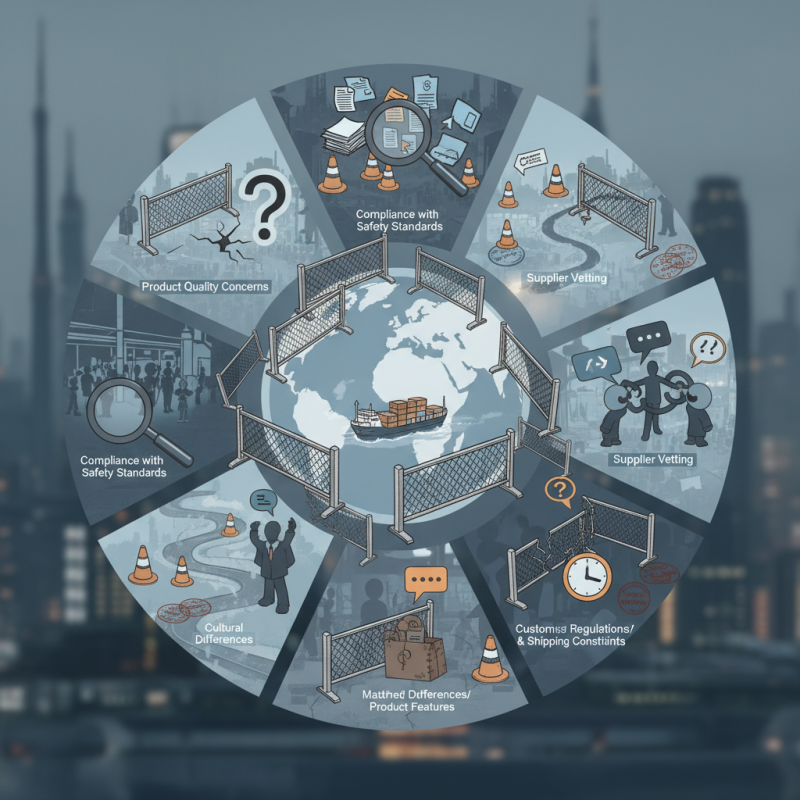
In today's global market, importers face numerous challenges when sourcing mobile barriers, or "Мобильное Ограждение," from China. According to recent industry reports, nearly 65% of global buyers express concerns about product quality and compliance with safety standards. This situation is amplified by the complexities of navigating the diverse manufacturing landscape in China, where quality varies significantly among suppliers. Understanding these barriers is crucial for effective sourcing.
Logistics issues also play a significant role. Approximately 30% of international shipments face delays due to customs regulations and shipping constraints. With the increasing demand for mobile barriers in events and public safety, buyers must be vigilant. Reports suggest that 45% of buyers do not thoroughly vet suppliers, risking potential setbacks.
Furthermore, understanding cultural differences can be a hurdle. For instance, miscommunications can lead to mismatched expectations regarding product features. This issue is often overlooked, yet it is essential to ensure that the barriers meet specific international regulations. Therefore, acknowledging these barriers can optimize sourcing strategies and enhance overall efficiency in procurement processes.
China's mobile market is a complex landscape. As of 2023, there are over 1.6 billion mobile subscriptions in the country. This represents about 113% of the total population. The prevalence of smartphones is notable. Statista indicates that over 95% of mobile users in China own a smartphone. This high penetration rates create significant opportunities for global buyers.
However, navigating this market is challenging. Regulatory barriers can hinder foreign businesses. Understanding local consumer behavior is crucial. For example, mobile payment apps dominate, with over 80% of transactions conducted via mobile platforms. Local competition is fierce, making differentiation essential for success. Additionally, data privacy laws are becoming more stringent.
Market entry strategies must be carefully considered. Global buyers need to evaluate partnerships with local firms. Research by Deloitte highlights the importance of localized marketing. Tailoring content for Chinese consumers can enhance engagement. The landscape is shifting rapidly, requiring ongoing analysis of trends and policies.
Navigating the mobile market in China is challenging for global buyers. Several regulations impact mobile sales, directly affecting foreign investments. A recent report indicated that over 40% of companies face barriers due to complex regulatory frameworks. These regulations can slow down the entry of products into the Chinese market.
One significant issue is the requirement for extensive certification for mobile devices. All electronic products must undergo testing and approval through designated Chinese institutions. This process can take months. Moreover, the Cybersecurity Law mandates strict data protection compliance, affecting how companies handle customer information. Non-compliance can result in hefty fines, which add pressure to foreign businesses.
Additionally, import tariffs on electronic components can affect pricing strategies. The cost of components, coupled with compliance expenses, forces foreign brands to reevaluate their market strategies. A survey revealed that about 30% of companies reconsider their pricing models due to these factors. Reflecting on these challenges, many buyers may find that thorough market research is essential for successful navigation in China’s mobile sector.
Managing a mobile supply chain from China poses unique challenges for global buyers. Supply chain disruptions often stem from a lack of transparency. Many suppliers may not provide real-time information about production delays or inventory levels. This can lead to unexpected shortages. Buyers must grapple with the unreliable communication that can complicate logistics and order fulfillment.
Another significant barrier is the regulatory environment. Compliance with local regulations can be daunting. Buyers often face difficulty understanding tariffs, taxes, and quality standards. These complexities create hurdles in sourcing quality mobile components. Additionally, varying labor costs across regions may lead to fluctuating prices. This uncertainty can complicate pricing strategies for global buyers.
Quality assurance is another area where challenges arise. Variations in manufacturing practices may lead to inconsistent product quality. Checking the quality of mobile parts sourced from multiple vendors can be labor-intensive. Buyers need to invest time in inspections, requiring a strong local presence. This can add to operational costs and complicate relationships with suppliers. Balancing costs and quality remains a constant challenge.
The Chinese mobile market is rapidly evolving, attracting global buyers. Understanding consumer preferences is crucial. Users in China have unique tastes. They value functionality and aesthetics alike. Many prefer devices that offer strong performance and sleek designs. Functionality often trumps brand loyalty. Consumers are quick to shift their preferences if better options arise.
Additionally, features like local language support are essential. Many users find devices lacking in this area frustrating. Battery life also plays a significant role in decision-making. A reliable battery can make or break a purchase for many consumers. Many product reviews highlight how battery longevity affects user satisfaction.
However, not all preferences are straightforward. Some buyers appreciate innovation but resist major changes. They often feel overwhelmed by too many features. This hesitation can result in negative perceptions of new products. Understanding these nuances helps global buyers navigate the complex landscape of the Chinese mobile market.
Navigating China's mobile barriers requires strategic insights. Industry reports reveal that nearly 70% of global buyers face challenges entering the Chinese market. The sheer scale and complexity of regulations can overwhelm newcomers. Buyers must prioritize understanding local compliance, as this can significantly influence market access.
Cultural differences play a crucial role. For example, communication styles vary significantly between regions. A study from the China-Britain Business Council indicates many firms struggle with local negotiations. This often leads to frustration and stalled deals. Engaging local consultants can provide valuable context and enhance communication effectiveness.
Furthermore, payment systems in China differ vastly from other markets. WeChat Pay and Alipay dominate, accounting for over 90% of mobile payments in the country. Global buyers lacking familiarity may find themselves at a disadvantage. Adapting to this ecosystem is essential for successful transactions. While challenges are plentiful, opportunities exist for those willing to navigate these barriers thoughtfully.
| Barrier | Description | Impact on Global Buyers | Suggested Strategies |
|---|---|---|---|
| Regulatory Compliance | Strict regulations on mobile applications and services. | May limit access to certain technologies. | Invest in local legal expertise. |
| Censorship | Filtered access to various apps and content. | Reduces available tools for business communication. | Use VPN services cautiously. |
| Payment Systems | Limited international payment options. | Delays in transactions. | Engage with local payment providers. |
| Market Entry Restrictions | Difficulties in entering mobile market. | Slower market penetration. | Partner with local companies. |
| Intellectual Property Issues | Concerns about IP theft and protection. | Potential loss of competitive advantage. | Implement robust IP strategies. |
| Cultural Differences | Varied user preferences and practices. | Risk of product mismatch. | Conduct thorough market research. |
| Technology Standards | Different mobile technology standards. | Incompatibility issues. | Stay updated with local tech trends. |
| Competition | High competition from local players. | Challenges in differentiation. | Focus on unique value propositions. |
| Data Privacy | Strict data laws affecting user data management. | Increased compliance costs. | Adopt local data handling practices. |
: There are over 1.6 billion mobile subscriptions in China, exceeding the total population by about 13%.
Knowing consumer behavior helps in creating products that meet local preferences and improve engagement.
Mobile payment apps dominate the market, with over 80% of transactions occurring on these platforms.
Buyers encounter challenges such as supply chain transparency, regulatory compliance, and communication issues.
Variations in manufacturing can lead to inconsistent product quality, requiring careful inspections.
Users prioritize performance, aesthetics, battery life, and local language support when buying devices.
Some users feel overwhelmed by too many features, leading to resistance against major updates.
Fluctuating labor costs and varying regulations can complicate pricing strategies for global buyers.
Evaluating partnerships with local firms and customizing marketing content can enhance market entry success.
Many consumers prioritize functionality over brand loyalty, often switching to better options quickly.
China's mobile market presents significant opportunities for global buyers, but it also poses several challenges often referred to as "Мобильное Ограждение." Understanding the regulatory landscape is crucial, as various laws impact mobile sales and distribution. Moreover, navigating the complexities of supply chain management from China requires careful planning to overcome obstacles such as logistics inefficiencies and communication barriers.
Consumer preferences in China are unique and can vary greatly, making it essential for global buyers to conduct thorough market research. Strategies to effectively navigate these barriers include building relationships with local suppliers, leveraging technology for better supply chain coordination, and staying informed about evolving consumer trends. By addressing these challenges, global buyers can position themselves for successful entry into the competitive Chinese mobile market.

LAN FAN